平穏 Gardens and Teahouse
Our Japanese Gardens
Our Sand and Stone Garden
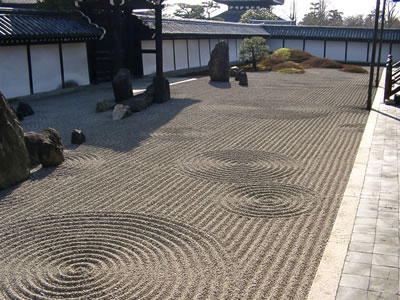
Gardens of raked sand or gravel and stone are referred to as karesansui gardens which literally translates to “dry landscape.” This style was developed in Japan in the late Kamakura period (1185–1333) and an important Japanese aesthetic principle underlying these dry landscape gardens is yohaku-no-bi, meaning “the beauty of blank space.”
While dry landscape gardens are sometimes referred to as Zen gardens, it is more accurate to refer to them as karesansui. In Japan, this style of garden is often part of a Zen monastery, such as the famous Ryoan-ji in Kyoto. Often attached to the abbot’s quarters, this style of garden was not meant for meditation [zazen], but for contemplation. Care of the garden was part of the monk’s practice.
Our Tea Garden
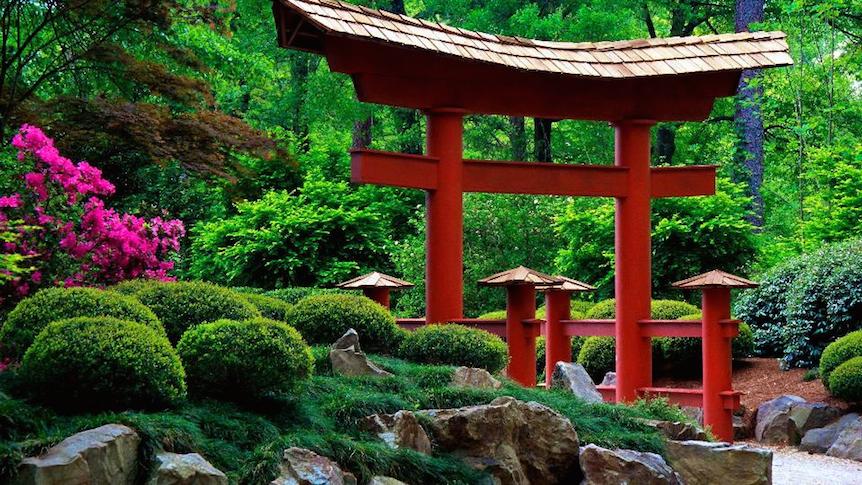
A Japanese tea garden [cha-niwa or roji] is a place for quiet reflection on the beauty of nature and the art of living in harmony. A pathway of carefully placed stepping stones, lined by lanterns, leads through the rustic garden to the tea house. Tea gardens were historically designed as peaceful, natural spaces to detach oneself from the hectic everyday world before entering the tea house and the tranquil world of tea ceremony [chanoyu].
The tea garden is appropriately more rustic than most other garden styles. This is particularly evident in the use of naturally shaped stepping stones. Tea gardens were the first kind of garden in which stepping stones and lanterns were used. The experience of walking through the roji path to the tea house is meant to give a sense of traveling a considerable distance: out of the city and deep into the mountains to the hermitage. As guests walk the winding path, their cares drop away and they arrive at the tea room composed and serene.
Our Pond Garden
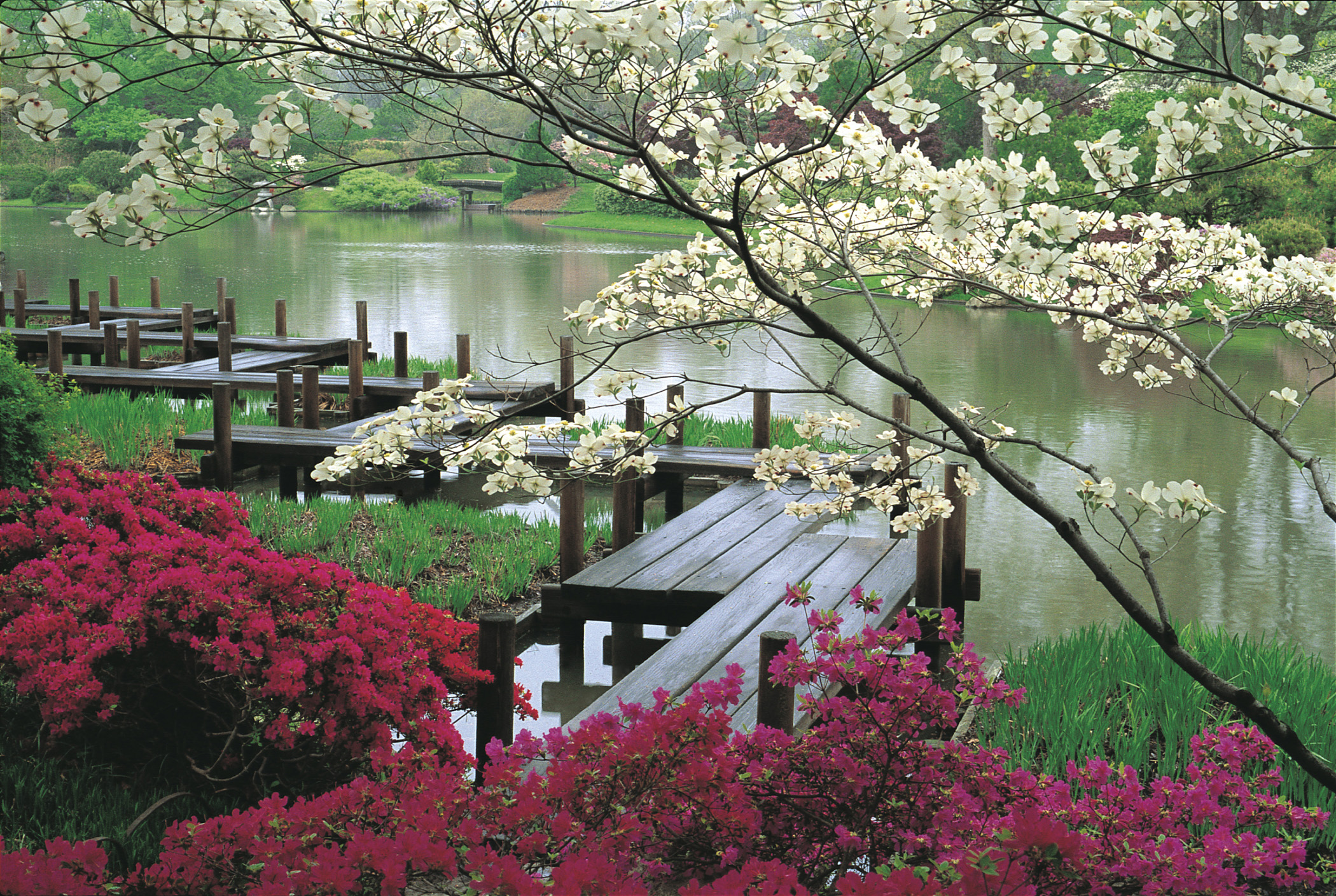
the Pond Garden [chisen kaiyu shiki teien] consists of Upper and Lower Ponds connected by a flowing stream. The Upper Pond features the iconic Moon Bridge, while the Lower Pond has a Zig-Zag bridge [yatsuhashi] which weaves through beds of Japanese iris against the backdrop of the stunning Heavenly Falls.
Historically, strolling pond gardens were attached to the estates of aristocrats and feudal lords [daimyo] during the Edo period (1603–1867). They were sometimes designed to be reflections of a landscape once visited, or the place of one’s birth, or even a famous place in China.
Manual Slideshow